


ILEUM
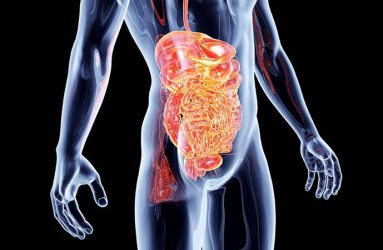
The small intestine consists of three distinct parts, the duodenum, the jejunum, and the ileum. At its distal end, the ileum is separated from the large intestine by the ileocecal valve. It is connected to the posterior abdominal wall by the mesentery. Its vascular supply is provided by the ileal arteries and its innervation by the abdominal and superior mesenteric plexuses.
Ileus is a condition in which the motility of the digestive tract slows down, which can lead to a build-up and blockage. The smooth muscle of the digestive tract moves in a series of waves called peristalsis, pushing food contents into the intestine.
Severe acute peristaltic disorders, also known as paralytic ileus, can lead to functional intestinal obstruction in which the muscles do not contract and can cause a buildup of gas and stool.
Chronic disorders are known as pseudo-obstructions and are due to chronic neuromuscular problems. Pseudo-obstructions can lead to life-threatening, persistent functional intestinal obstructions.
Unlike paralytic ileus, a mechanical intestinal obstruction results from a physical blockage of the intestines. It is often a complete obstruction and is usually the result of conditions that cause the intestines to slip or twist, eventually cutting off blood vessels and causing tissue death.
Other physical obstructions in the digestive tract include masses, such as tumors, hernias, as well as postoperative adhesions that can form during healing.
Ileus, therefore, can be due to intestinal obstruction (mechanical) or to functional slowing of the intestine (paralytic ileus).
The most common cause of ileus is abdominal or pelvic surgery that triggers a stress response that immobilizes the digestive system.
Ορισμένα φάρμακα μπορούν επίσης να επιβραδύνουν την περισταλτισμό.
Systemic inflammation and severe pain requiring prolonged opioid use can often lead to ileus.
Other causes include intra-abdominal infections such as gastroenteritis, systemic infections such as sepsis, and metabolic abnormalities such as hypothyroidism and electrolyte imbalances.
Diagnosis begins with an evaluation of the person’s medical history. The severity of signs and symptoms often depends on the presence of intestinal obstruction and may include abdominal pain, bloating, loss of appetite, a feeling of fullness, nausea, vomiting, and inability to pass gas or stool. A CT scan helps to find the mechanical cause.
An ileus can lead to potentially life-threatening complications and should be treated immediately with surgery. Treatment for ileus focuses on resting the bowel by limiting oral intake and stopping medications that may be causing it. If there is severe nausea and vomiting, decompression of the gastrointestinal tract may be performed by inserting a tube from the nose into the stomach to relieve pressure caused by bloating and accumulation of contents. In case of failure of the ileus to heal with conservative means or in case of frequent recurrences, surgical treatment is required, either laparoscopically (preferably) or open.